This be the verse!
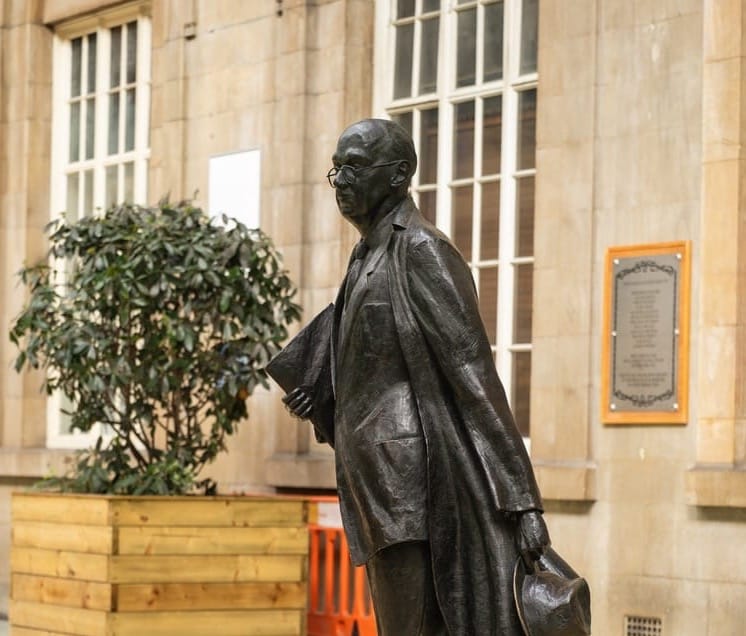
It is over 50 years since Larkin’s profane, ironic, blunt, and dark-humoured / tongue-in-cheek poem was first published. I loved it because as a teenager in the 1970s it provided me a convenient, empowering and suitably rebellious narrative to shape a truth of how I felt about life at that time.
The poem’s famous opening line - “They fuck you up, your mum and dad” - bluntly aligns with contemporary conversations about mental health, therapy, and the need to unlearn harmful patterns.
They fuck you up, your mum and dad.
They may not mean to, but they do.
They fill you with the faults they had
And add some extra, just for you.
But they were fucked up in their turn
By fools in old-style hats and coats,
Who half the time were soppy-stern
And half at one another’s throats.
Man hands on misery to man.
It deepens like a coastal shelf.
Get out as early as you can,
And don’t have any kids yourself.
Phillip Larkin 1971
[1] "This be the verse" is taken from the poem “Requiem”, by Robert Louis Stevenson. In context, it means: “Let this be the verse you carve on my gravestone”
However in 2026, "mum and dad" represent far more than just biological parents. They act as symbols of societal behaviours, structures, and coping mechanisms, outdated societal rules, self-interest, economic fragility, climate anxiety and the intergenerational transfer of societal trauma passed down across eras. The poem frames this damage as both unintentional and structural. Even the tongue in cheek prescription – to avoid perpetuating the cycle by not having children - echoes a very real decision some young adults consider today as they weigh the ethics, economics and risks of parenthood.
The poem’s bleak, profanity-laced narrative might have shocked readers in the 1970s. Today it can be more widely embraced as a darkly humorous and deeply honest meditation on the realities of growing up.
All these years later, sitting alongside a litany of reports, shocking statistics and commentary on and from young people, it is both distressing and extremely disturbing to realise the relevance it still holds. The poem again offers language to describe an inherited struggle, shaped by pressures - familial, social, political and economic - that young people did not choose, yet must somehow navigate, accommodate and attempt to resolve:
- In May 2026 Lifeline and ASB Bank published “State of the Generation[1]”. This report revealed that the most important issue facing young people today is mental health (59%). The biggest concern cited by many is a lack of mental health support - not knowing which mental health organizations to approach for help.
- In 2024 an assessment of youth mental health and wellbeing painted a picture of a system that continues to marginalise young people, especially young people with lived experience of mental distress and addiction. It also showed that New Zealand's persistently high youth suicide rates reflect patterns of inequalities in the broader determinants of mental health.[2]
- Recent findings from a recent UNICEF report (2025) show worsening youth mental health in Aotearoa New Zealand[3]. This is not new information, but seeing how we measure up internationally clearly tells us that we are simply not doing enough. We are failing to address well-established high rates of suicide and mental distress among our young people as a nation.
- In 2024, the Auditor-General completed a review of the mental health needs of young New Zealanders. “Mental health concerns are not evenly distributed in the population. Some groups of young people are particularly affected, including rangatahi Māori, Pacific people, disabled people, Rainbow people, people in care, people not in education, employment, or training, and people in the criminal justice system.”
- Koi Tū, Centre for Informed Futures reported on key issues that shape young people’s mental wellbeing[5].
Six consequent areas for action were identified to address the drivers of distress:
- Tackling sources of adversity such as poverty, discrimination, and family instability.
- Building resilience through skills that help young people manage uncertainty.
- Strengthening belonging in whānau, schools, and cultural identity.
- Improving experiences at school, where achievement pressure and negative environments weigh heavily.
- Expanding access to timely, youth-friendly and equitable mental health services.
- Better understanding the role of social media as both a risk and opportunity.
In May, Skills Group (New Zealand’s largest private training provider) reported an increase in youth unemployment. This now stands at about 98,000 young people unemployed. In addition, nearly 70% of students do not plan tertiary study; nor do they have access to alternative structured pathways to develop their future.[7]
In April 2026, the Helen Clark Foundation published a report on Social Cohesion in New Zealand[8]. Not just a “feel good” concept, social cohesion refers to people’s experience of:
- belonging—a sense of being part of the community, trust in others and respect for law and human rights
- inclusion—equity of opportunities and outcomes in work, income, education, health and housing
- participation—involvement in social and community activities and in political and civic life
- recognition—valuing diversity and respecting differences
- legitimacy—confidence in public institutions
To say the least it was troubling to read that “trust in the government” is at an all-time low. Just 2 out of 5 people. Shockingly nearly 2 in 3 people under-30 say they feel isolated at least sometimes. This was just 1% in 2010.
While social cohesion and fiscal management are usually discussed at discrete quite different “tables”, However, they may now deserve to be referenced in the same sentence. There is mounting evidence that suggests that social connected-ness, social capital can dramatically improve a country’s economic fortunes. Scandinavia are often highlighted as examples[9]
So we do appear to be very well-informed about the issues facing young people. But how did we let this happen? It didn’t happen overnight. Nor did it happen under the watch of any specific government. Where is the urgency required to remediate these statistics?
Not only fiscal
I’m becoming sick of hearing about these realities being framed as solely fiscal challenges. I’m becoming tired of the future social wellbeing of this country at best being taken for granted, at worst being further degraded and left for our descendants to live with. I’m sick and tired of self-interested political slogans of authority such as “We remain committed to…” or “What kiwi’s want is…”, or “We have invested a further $XX million into XYZ mental health…”, while constantly assigning and/or shifting political blame and responsibility to others...
Young people are clearly experiencing real and significant distress, whose ultimate causes include be debt, employment, relationships, housing, violence, abuse… even their wider health. Inexcusably the state can only respond by either medicalising their needs as a “mental illness” – or else deeming them as, at worst, “malingerers” or at best requiring “re-assessment”.
Mental distress seems to be still [conveniently?) regarded as a problem inside the person experiencing it. Interventions therefore need to be directed at that individual. Social determinants of mental health (of which meaningful employment is one) is now recognised (in screeds of literature) as one of the most powerful influences on population mental health and wellbeing.
Most people seem to intuitively know this. Typically, however, the system seems only able to nod in passive agreement, but then return the focus of interventions to the “adverse pathology” of the individual.
It does beg the question, how much are the projections of exponential long term benefit receipt evidence of the ineffectiveness and reduced relevance of a mental health system designed last Century? Whose needs are being prioritised here?
If we are risking writing off a generation of young people because they experience typical (I say “typical” because 50%-80% of New Zealanders will experience mental distress or addiction challenges in their lifetime[10]), then it is a moral problem.
We have a moral problem
As He Ara Oranga[11] concluded, it is now, more than ever, critical that we not over-medicalise problems where inappropriate and to focus more on the practical barriers that people face and that often exacerbate their conditions. Things like the quality of work, housing, exposure to violence, racism, drug misuse and abuse, loneliness, issues with caring, financial pressures... And dare I say it, the 21st Century manifestations of colonialism – marginalisation, meaning, identity… that are still so quickly dismissed as irrelevant, mainly by those who have never experienced it.
These are now more commonly the realities for people struggling to live their lives. These are realities that exist and are experienced in communities; their resolution also abides in those communities. Do we in fact believe that communities have the wisdom to contribute to and resolve their own problems… can there be a greater willingness on the part of state institutions to partner and share resources?
Jargon or action?
At the start of this Century the late Judge Michael Brown highlighted how conceptions such as collaboration, partnership and empowerment too easily become jargon. His commentary remains relevant and - written in 2000 - virtually prophetic:
“Empowerment… by definition the exercise is one involved a transfer of power requiring those who previously held that power to let it go. My own observation has been that while there may be some enthusiasm to hand over responsibility this is not accompanied by any great desire to hand over control. That, I suggest, is a matter requiring a high level of integrity and commitment by those who previously held power, otherwise it simply becomes empty rhetoric.”
“…where empowering takes place, where organisations do cooperate, and where a philosophy is shared, the results at times were outstanding. Dramatic change in this whole field… will occur only with major attitudinal and societal transformations.”[12]
In the UK Neighbourhood Mental Health Centres are being piloted. Initial reports indicate that these are both transformative and having an impact. With the success of the “access and choice” initiatives, is it time to now invest in our own “neighbourhood/whānau mental health centres”?
Fundamentally (and at risk of homogenising diverse people’s basic needs), our ability to live lives of meaning and purpose would be greaty enhanced is we each had a place we call home, connected to the people and things we love, in communities we choose, where we look out for each other, doing the things that matter to us. In 2026, why has this become so difficult for so many – and so many more….?
Warning Larkin still in place!
If Larkin’s warning still resonates more than half a century later, then the issue is not simply one of generational inheritance - it is one of collective responsibility. We can no longer afford to frame the distress of young people as an inevitable by-product of growing up, nor as a problem contained within individuals. The evidence is overwhelming: what young people are experiencing today is shaped by the environments we have allowed to develop - socially, economically, and politically - and by the choices we continue to make or avoid.
Intergenerational hardship
To persist with systems (not just “mental health”) that continue to individualise struggle and distress while overlooking its underlying causes is to reinforce the very cycle Larkin describes. In doing so, we risk deepening that “coastal shelf” of intergenerational hardship rather than reshaping it. The uncomfortable truth is that this is not a failure of understanding - it is a failure of will.
Yet the above also points toward something more hopeful. If the determinants of mental wellbeing lie within communities, relationships, safety, meaningful work, belonging, and opportunity, then so too does the capacity for change. The question is not whether solutions exist, but whether we are prepared to shift our thinking - to invest not just financially, but ethically, in a different future.
This requires moving beyond rhetoric and reactive policy toward a more intentional, community-centred, and future-facing approach. It asks us to see young people not as liabilities to be managed, nor as problems to be solved, but as essential contributors to a shared future worthy of their belief and participation.
If we are serious about breaking the cycle, then we must do more than just simply recognise the problem - we must act differently. If we don’t, we risk passing on not just the burdens alluded to in Larkin’s poem, but in addition a far heavier, more entrenched legacy of our own making.
[1] https://youthline.co.nz/state-of-the-generation-report-2026/
[2] https://www.mhwc.govt.nz/our-work/wellbeing/youth-rangatahi-wellbeing-assessment/
[3] https://www.unicef.org/innocenti/media/11111/file/UNICEF-Innocenti-Report-Card-19-Child-Wellbeing-Unpredictable-World-2025.pdf
[4] https://www.health.govt.nz/monitoring-statistics/surveys/child-and-youth-mental-health-study
[5] https://informedfutures.org/youth-mental-distress/
[6] https://www.stuff.co.nz/politics/360840781/why-nearly-90000-kiwis-arent-working
[7] https://skills-group.org/wp-content/uploads/2026/05/Mutliple-Pathways-to-Success-April-2026.pdf
[8] https://www.helenclark.foundation/social-cohesion
[9] https://demos.co.uk/research/social-capital-2025-the-hidden-wealth-of-nations/
[10] https://mentalhealth.inquiry.govt.nz/inquiry-report/he-ara-oranga/chapter-1-the-inquiry/1-4-context
[11] https://mentalhealth.inquiry.govt.nz/inquiry-report/he-ara-oranga
[12] Brown, M.J.A., (2000). Care and Protection is About Adult Behaviour, Ministerial Review of the Department of Child, Youth and Family. Report to the Minister of Social Services and Employment.