Shared ground
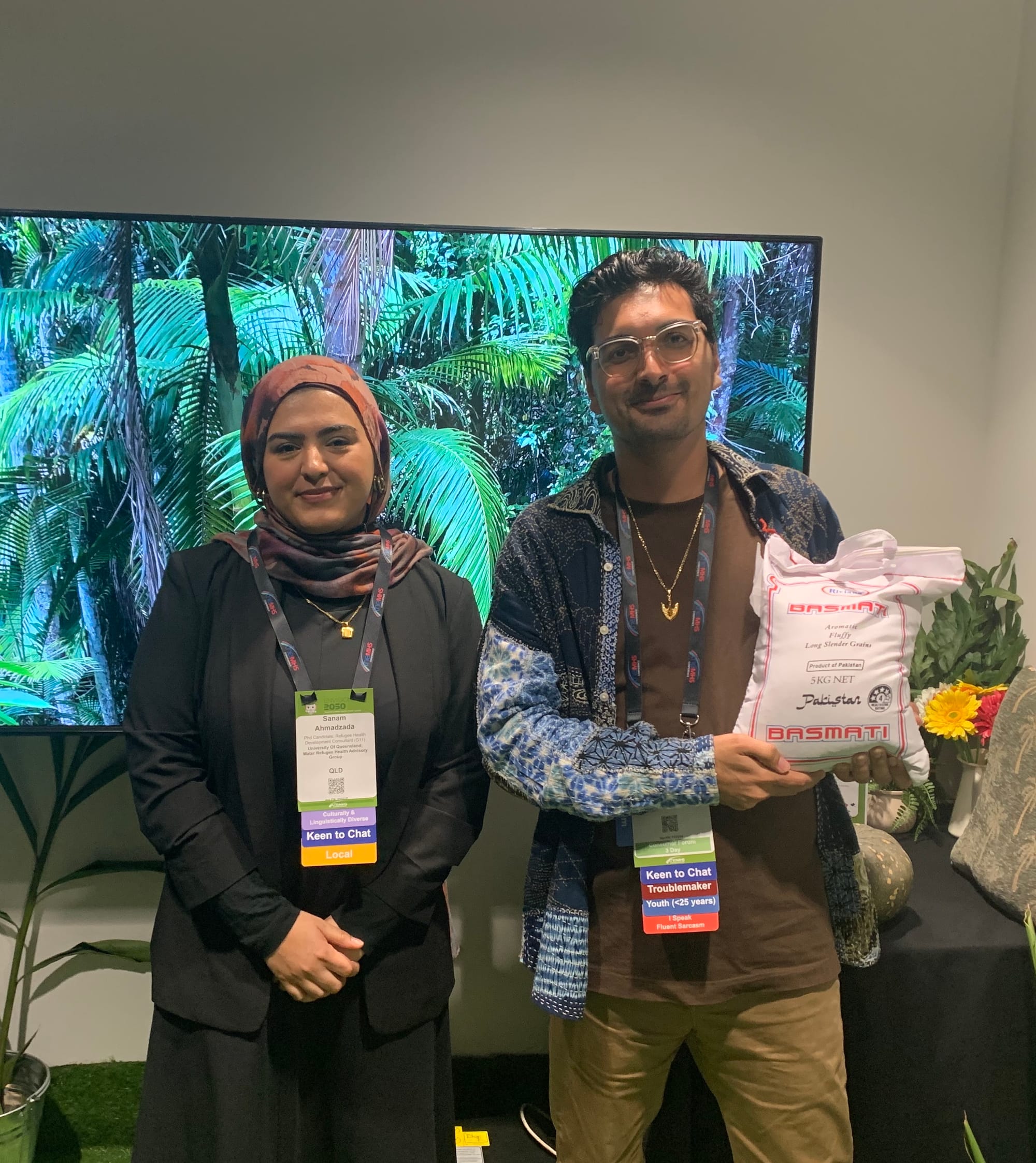
At TheMHS 2025 in Brisbane, we were lucky enough to catch up with Mohammad Irahim and Sanam Ahmadzada. Both Australians hail from Afghanistan, and are activists for mental health and wellbeing within Culturally and Linguistically Diverse (CALD) communities. Here's their take on the state of play .
Discrimination and Survival
When people arrive in Australia from places marked by war, colonisation, or political unrest, their first thought is not about mental health. It is about safety, food, and shelter. You do not stop to analyse how you feel when you are focused on staying alive. Mental health issues often emerge later, once people are finally settled enough to rest.
Discrimination shows up in many ways.
- It can fracture families. It can push people out of their communities.
- It can create deep isolation that erodes identity and belonging.
- In some families, discrimination manifests as denial or silence.
- In others, it takes the form of ridicule or shame.
Within our own community, we’ve seen how this pattern repeats. People who are unwell often describe their symptoms in physical terms because that feels more acceptable.
They say they have headaches, heart pain, or stomach problems, when what they really mean is that they are anxious, traumatised, or depressed.
In many languages, there is no word for mental illness. There are words for sorrow, exhaustion, and spirit pain, but not for what happens when all those things collide.
Conversations that change the air
Despite this, change begins in small ways. It starts with quiet conversations within families and circles of friends. People might not say “mental health,” but they talk about someone who is struggling. They talk about someone who does not leave the house anymore, or who cries often, or who has become angry and withdrawn.
Community connection is another form of prevention. When people feel connected to others who understand their experiences, they are less likely to fall through the cracks.
- Cultural festivals
- Language groups
- Religious gatherings
can become spaces of healing if they are safe and inclusive. Yet these spaces are rarely supported or recognised by mainstream policy.
Health in every sense
For our communities, mental health cannot be separated from physical, social, or spiritual wellbeing. When we talk about recovery, we are not talking about a diagnosis or a treatment plan. We are talking about the whole of life.
That means:
- Relationships
- Work
- Family
- Faith
- Food
- Movement
Barriers that keep people out
Language is the most obvious barrier, but it is not the only one.
Access depends on paperwork, policy, and privilege. A person with a Medicare card can access a range of services. A person seeking asylum may have none of those rights. International students often fall between systems altogether.
Representation also matters. When people walk into a clinic or call a service, they need to see someone who looks like them, who understands their cultural context, and who speaks their language fluently. Without that, the first experience of help can feel unsafe or alienating.
Structural racism compounds these barriers. It exists in policies, funding structures, and leadership. It exists in whose voices are heard and whose are missing.
Changing the system
If we are serious about change, the system must transform at every level. We have identified five areas where that transformation can begin.
- Fund communities to lead their own healing. Every community already holds knowledge about what works. What we lack are the resources and spaces to apply it. Funding should flow directly to community-led projects that build connection and trust.
- Fix language access. Interpreting services are inconsistent and often inaccurate. People need interpreters who are trained, culturally competent, and respected as essential members of the care team.
- Ensure representation at every level. Lived experience must not stop at advisory groups. It must extend into leadership, boards, and executive decision-making. If we would not accept non-Indigenous people leading First Nations organisations, we should not accept non-CALD people leading CALD mental health initiatives.
- Change policy frameworks that reinforce exclusion. Migration laws, funding models, and bureaucratic procedures often make genuine co-design impossible. Real inclusion requires flexibility and trust. It requires governments and institutions to share power.
- Apply an intersectional and social determinants lens to everything. “CALD” is not a single identity. The experience of a white migrant from the UK is entirely different from that of a Muslim woman from Afghanistan. Gender, race, class, religion, visa status, and disability all shape how people experience discrimination and access care. A one-size-fits-all approach will always fail.
What individuals can do
Systemic change takes time, but personal action matters too. For anyone from a culturally diverse background who is struggling, our advice is simple.
- Focus on health as a whole. Care for your body, your mind, your relationships, and your surroundings. When one part heals, it lifts the others.
- Be the change you want to see. If you would support a friend who opens up about their struggles, allow yourself the same care.
- Be patient. Change is slow. It takes courage to unlearn discrimination and to talk openly about what hurts. But every conversation helps.
Towards shared belonging
Ultimately, this work is about belonging. People cannot heal in systems that do not see them. They cannot thrive in spaces where their culture is treated as a problem to be solved.
The mental health sector in Australia has grown more aware of diversity, but awareness is not the same as equity. True equity means shared power, shared language, and shared responsibility. It means moving beyond token inclusion to genuine partnership.
We do not expect change overnight. Change is slow, but it can be meaningful. As we often say to each other in this work: nothing about us, without us. That is where hope begins.