The library that never sleeps
I was twenty-eight when I sat in the hallway of a hospital in Singapore, realising that I had no identity outside of shipping and sports. I’d shattered a disc in my spine and was suddenly told I couldn’t play football again, which was my largest private identity, and that working in an office would be hard. In that moment, it became clear to me: I’d built an entire life on what value I could create through performance. Without it, I was lost
15 years earlier, I’d survived a suicide attempt at thirteen. Back then, I didn’t tell anyone what I was going through, and when I hit rock bottom after losing my identities, at twenty-eight I kept silent yet again. Two different life stages, two different reasons, but the same labyrinth of independence kept me silent. That labyrinth of silence is what I’ve been trying to break ever since.
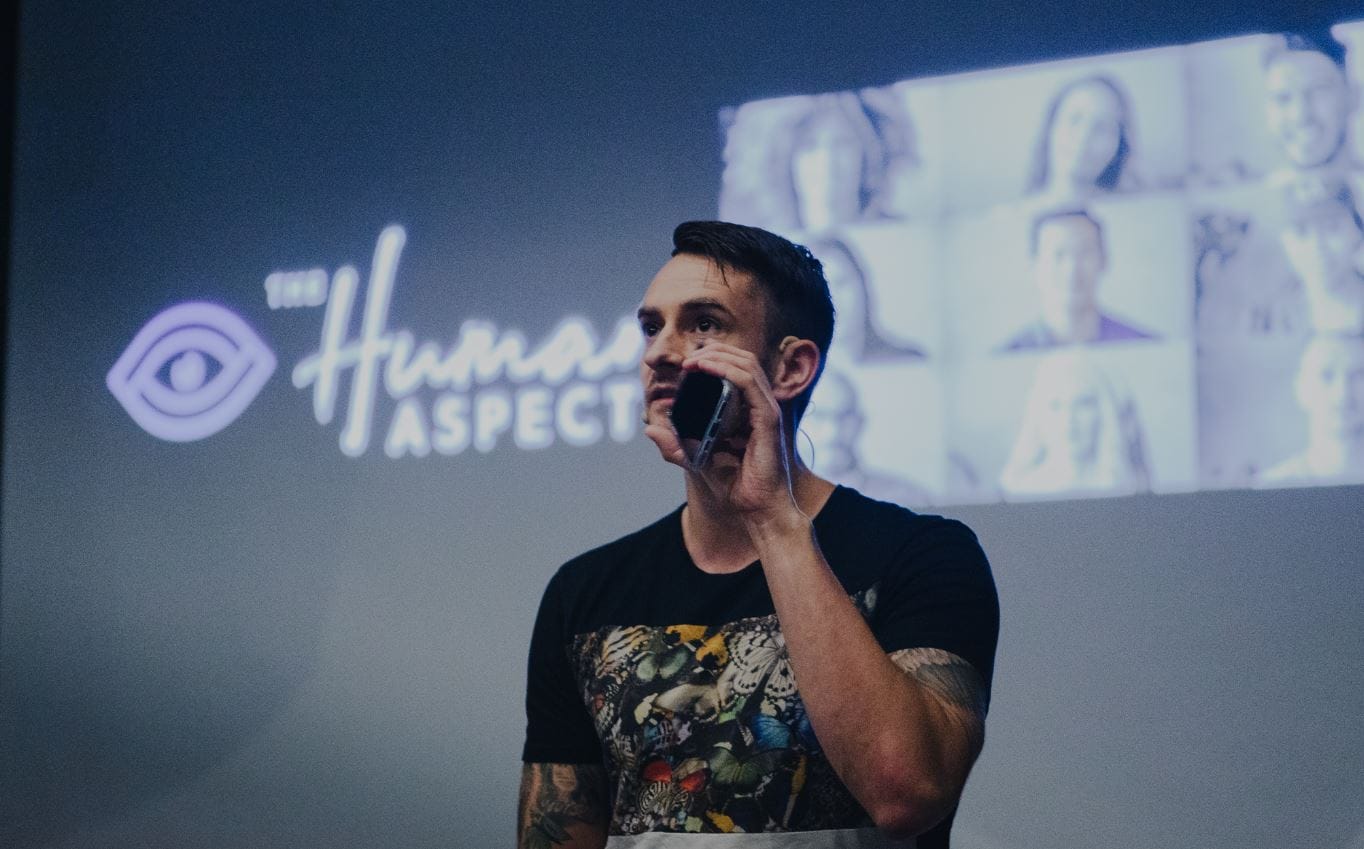
I’m the founder of the Human Aspect Foundation, based in Norway. For the last nine years, we’ve been building what is now the largest free global digital mental health resource: the Life Experience Library. ON the contrary of traditional clinical models, its built around lived experience, captured on camera. Stories from over 750 people, across more than 100 countries, talking vulnerably and openly about the toughest challenges of their lives, from mental illness to cancer to addiction to grief.
What I Needed Didn’t Exist
The gap we’re trying to fill is the one between life and the support system. When something painful or traumatic happens, most people aren’t ready to pick up the phone and call a psychologist or your closest friend. We’re not help-seeking yet. Many of us are still isolated, confused and maybe ashamed. And yet that’s when society tell us to reach out in simplistic campaigns and social media content. I know from experience that to be vulnerable, there needs to be space for it, space that isn’t there for most today.
What I needed didn’t exist. So I built it.
The Life Experience Library is accessible anytime, anywhere.
What we've seen is powerful
- Users develop a stronger emotional vocabulary
- They begin to shift from shame to curiosity
- They feel less alone, and start connecting
- They understand different conditions better
- They start moving from isolation toward action
It’s designed to be a stepping stone. A place that bridges the gap until they’re ready for more structured support, or as a supplement while they’re in it.
Real reach, real impact
Since launching in 2016, our content has been viewed over 100 million times on social media. The full library now has more than one million users across every country with internet access.
To address this, we’re scaling through partnerships. We’re not here to replace mental health services. We’re here to support them.
Organisations like MindSpot in Australia and Friendship Bench in Zimbabwe are integrating our resources into their models. Friendship Bench, for example, trains grandmothers and psychology students to provide low-threshold support. They now use our content to strengthen that work.
We’re also active in the education system, because supporting youth is a key priority. Over the past four years in Norway, we’ve aligned our stories with competency goals in the curriculum, across all subjects like English, history and social sciences. The programme is being rolled out in schools now for youth between 13 and 16 years old, with pupils engaging in up to 40 sessions a year. Not just those who are struggling. Everyone. This is how we build emotional resilience at scale for our next generation.
To find out more visit ;

We train for emotions
There’s a global push, especially around suicide prevention in men, that says “just talk about it.” But we can’t just tell people to be vulnerable. That assumes they’ve been trained for it. Most haven’t, I know I had not.
If you’re a 35-year-old man who’s never been taught to speak about feelings, how exactly do we expect them to “open up”? Compared to someone raised in a more emotionally expressive environment, the barrier isn’t just shame or fear. It’s unfamiliarity, lack of experience.
What we need are spaces where people can practise vulnerability safely. Without the pressure of clinical settings. Without fear of judgment or feeling embarrassed. That’s what our platform offers. And that’s what companies, schools and therapists can leverage. But first and foremost, all of us.
ABOUT THE AUTHOR
Jimmy Westerheim is the founder and CEO of the Human Aspect Foundation. A former shipping manager, field worker and athlete, he now works globally to make lived experience central to mental health support.